
The Fagans were busy over the wet summer trying to dry out the house and prevent further damage to the foundation and rear lean-to. Before stabilizing and buttoning up for the winter (see next post coming soon!), they wanted to properly document the house before restoration and rehabilitation work begins. They have also started researching past occupants.
In October, Preservation Connecticut staff were able to visit the Fagans and their team and watch the process of a LiDAR scan to document the house. LiDAR (the name comes from “light” and “radar”) is a method of collecting surface data using a laser scanner mounted on a tripod which captures the precise distance of densely scanned points over a given object at rapid speed, in this case the exterior and interior spaces of the house. The result is a 3D image that can be converted for use in CAD modelling or building information modelling (BIM). James Schmittberger, of GNCB Engineers was hired to perform this scan which is typically used in architecture and construction. The video to the right shows the outcome of the exterior scan that we got to preview!
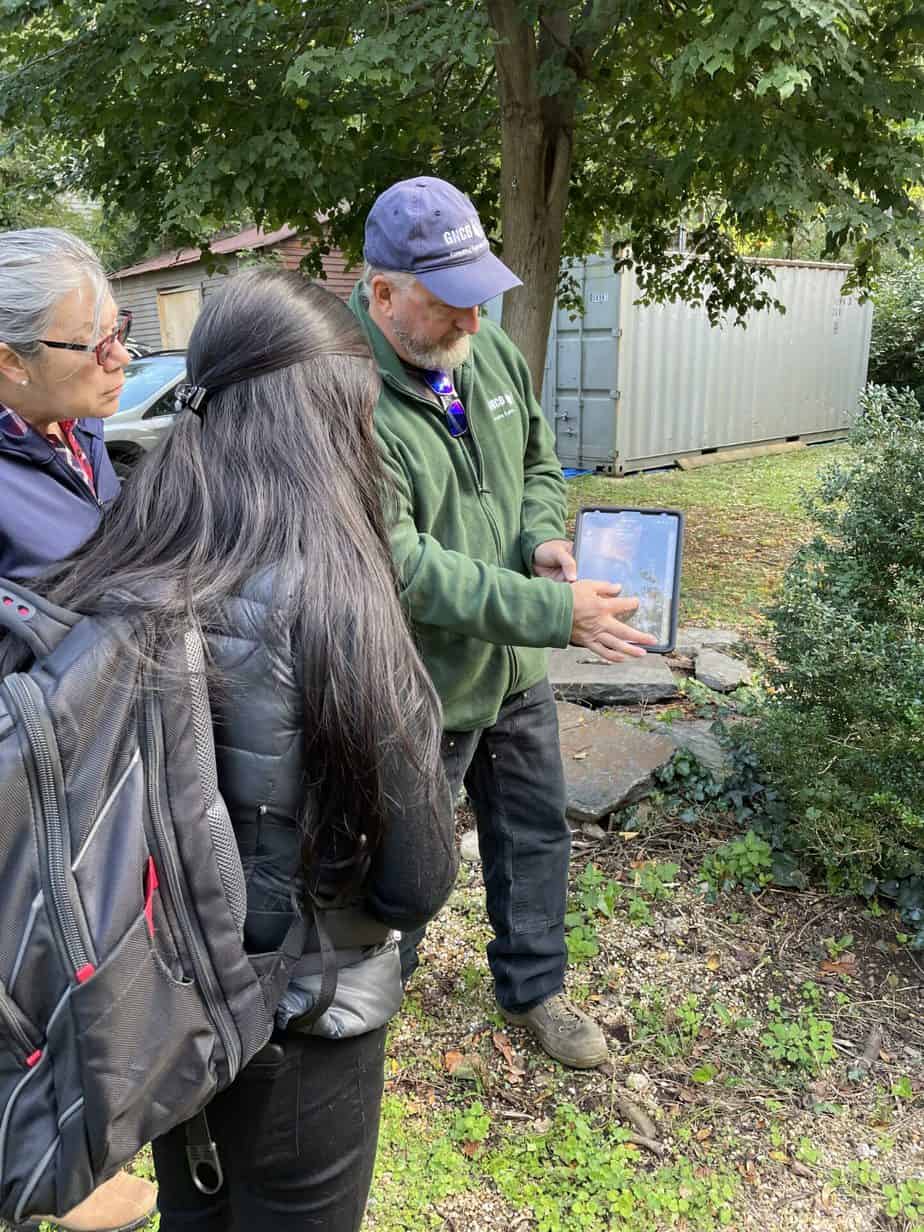
James Schmittberger shows the results of the LiDAR exterior scan.
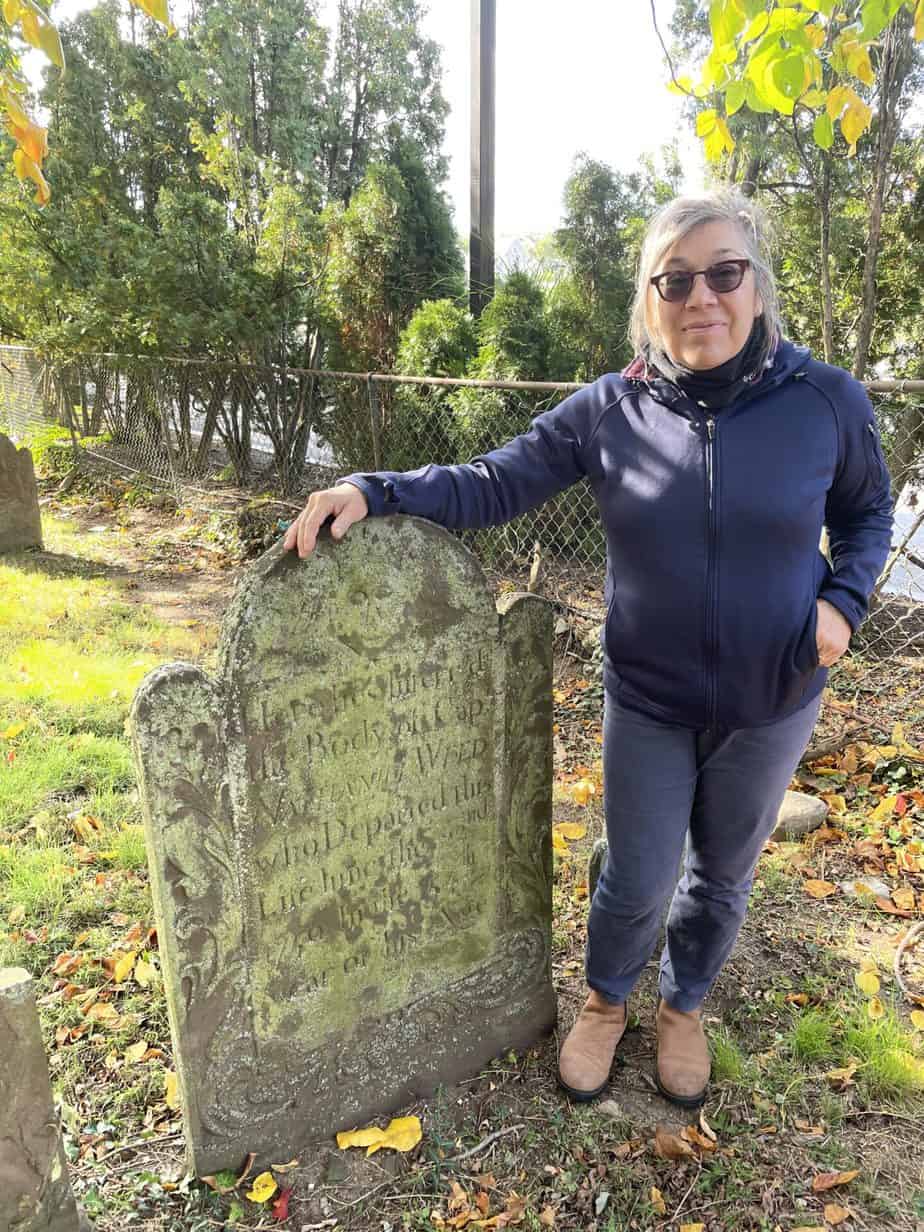
Ellen Fagan with Nathaniel Weed’s gravestone.
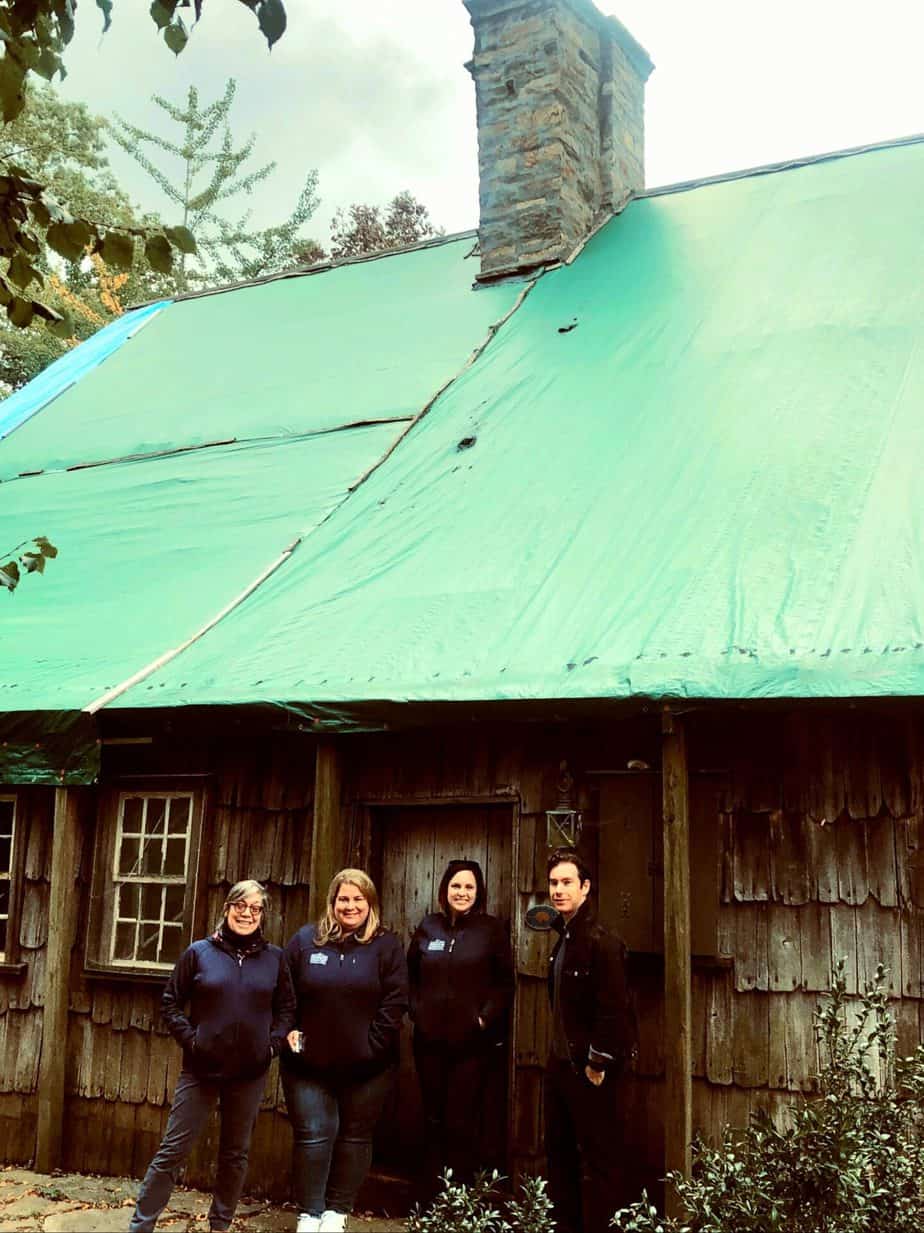
Preservation Connecticut staff with the Fagans in front of the rear portion of the house.
While the scanning process was underway, we were honored to join Ellen Fagan as she went to explore the nearby Noroton River Graveyard. Her goal was to find members of the Weed family buried there. It was a success! We found Captain Nathaniel Weed, who bought the property from Nathaniel Pond in the early 18th century, and several other members of the family.
The Fagans plan on visiting similar houses this winter to connect with other homeowners and possibly shed light on some of the mysteries of the structure. If you have ideas for them, please contact us and let us know!
Previous posts from this series: