

It’s been a longtime goal of Preservation Connecticut to document preservation projects from start to finish. Typically, this process has been completed in the form of before-and-after photos and brief updates. We recently were given the opportunity to take this documentation process to the next level: a full, in-depth journey through the restoration of Darien’s oldest home, the Pond-Weed House (c. 1694).
Our side of the journey began when the Pond-Weed House was put up for sale in 2020 and Preservation Connecticut was called upon to help market the property in our Historic Properties Exchange and provide technical assistance. It was then that we were introduced to the mother-son
team of Ellen Hackl Fagan and Christopher Fagan. We kept a close eye on the property and were delighted when Ellen and Chris expressed their interest. To make a long story short(er), the Fagans purchased the home and immediately started devising a restoration plan for the house. It was our luck that they agreed to documenting the process and sharing their restoration journey with us as they transform this historic property into their family home.
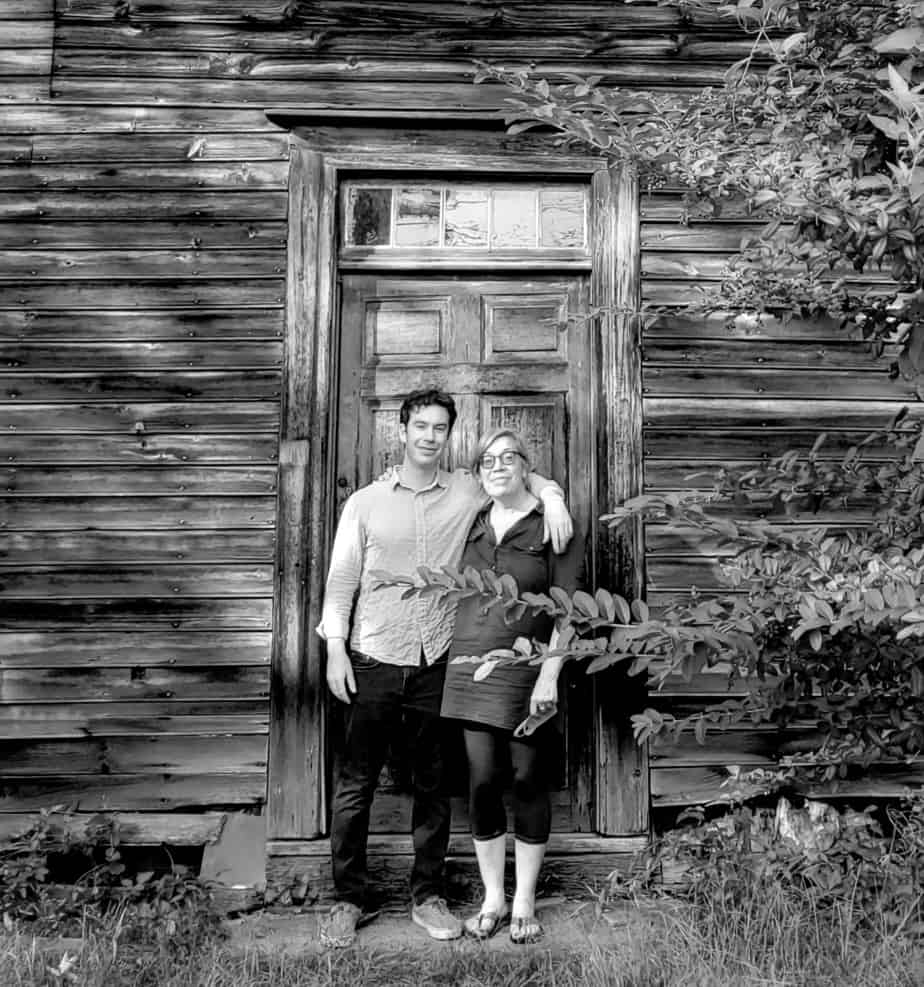
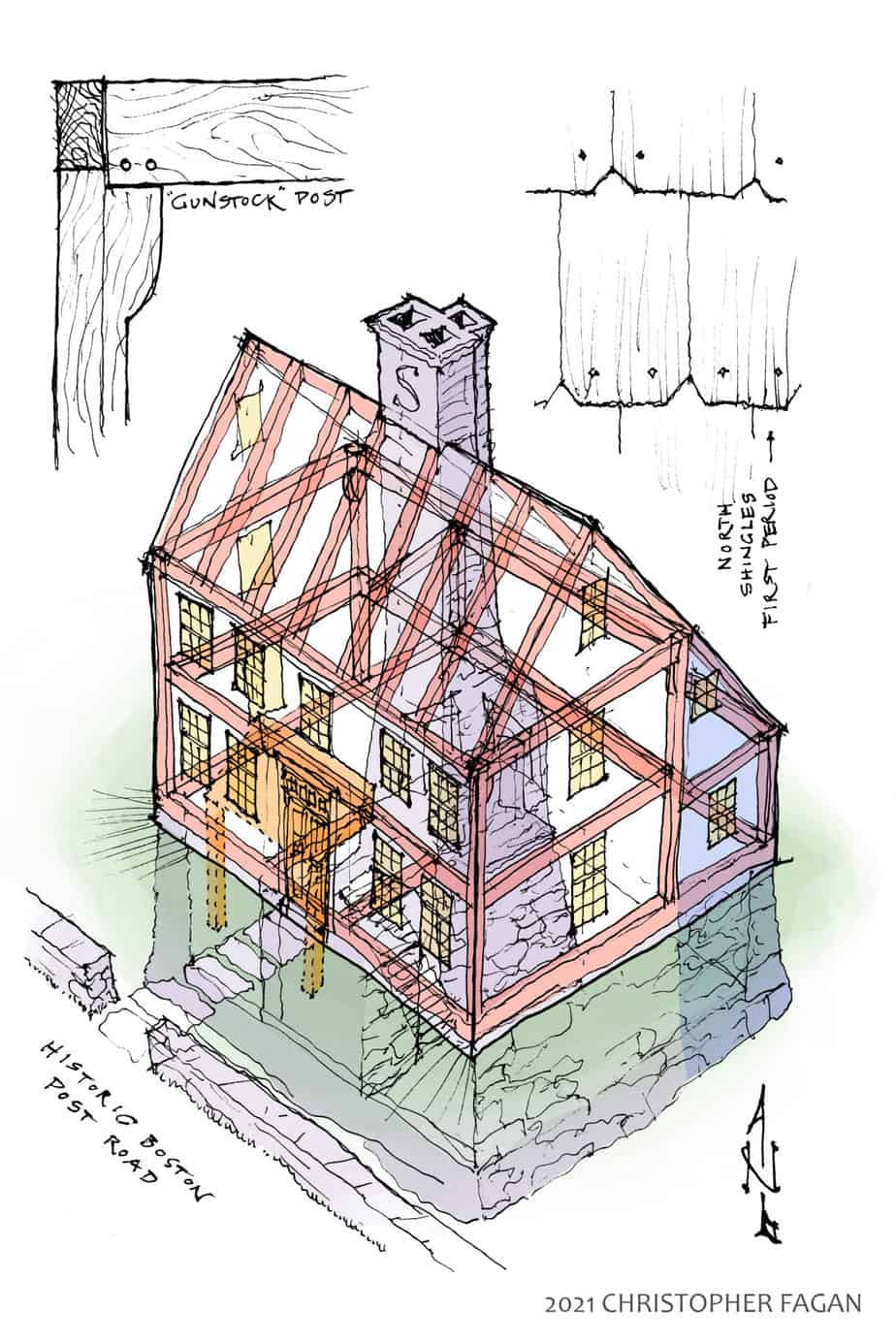
As Chris eloquently explained, “Historic preservation does more than honor our history. It enriches our modern way of living. The Nathaniel Pond House, standing on its original foundation at the gate of Darien is an elegant mixture of Dutch and English First Period colonial architecture. Our family is honored to receive this important house into our hands and will start a new chapter in its life as a treasured home, a place for the arts, and an asset to our community. We are beginning to carefully restore this structure in an authentic manner. As an architect, I hope not to leave my personal mark on the Nathaniel Pond House, but that the home leaves its imprint on us. I want to share the lessons that this home can provide for our modern building culture.”
So, as the first post in the Living History series, here is where the Fagans’ restoration of the Pond-Weed House stands:
The first steps involved Chris and Ellen meeting with town officials, local experts, structural and civil engineers to discuss their ideas and confirm their viability. Check.
Step two, which will be starting in September, is to stabilize the structure to protect it from further deterioration.
As a sneak peek to step three, you can expect the use of cutting-edge tools, including LiDAR 3D scanning and BIM digital modeling, but more on that later!
Preservation Connecticut is genuinely excited for this opportunity to share the process of restoring a historic home. We view this as an educational experience for our fellow preservationists, tradespeople, and those who just appreciate old buildings. Stay tuned to continue the journey!
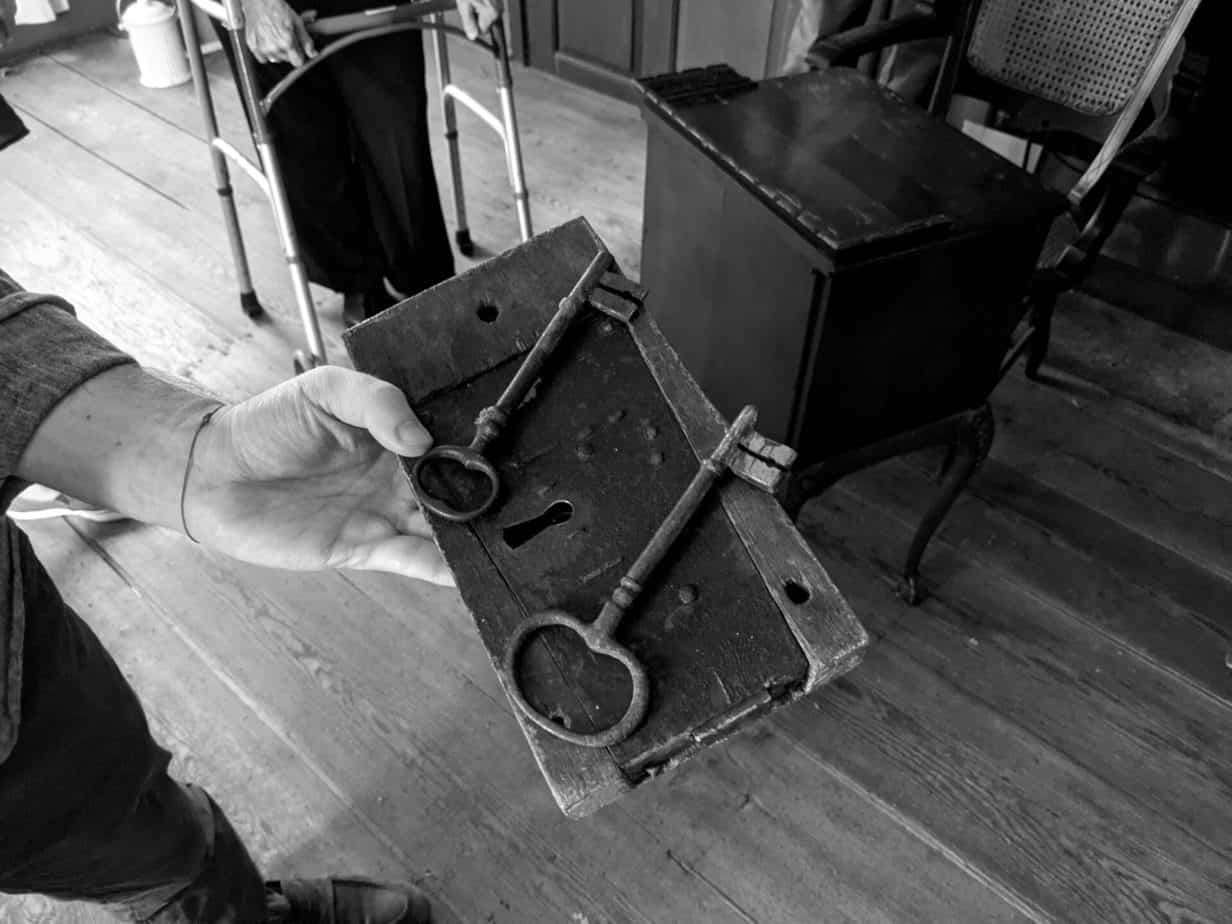
Here’s a bit more about Ellen and Chris:

Ellen Hackl Fagan is a contemporary artist, curator, and the owner of ODETTA Gallery, based in New York City. Her interest in preserving the Pond-Weed House stems from a deep love of history and the hand-made. Ellen raised her three sons in the circa 1745 Isaac Judson house located in Woodbury, CT. Since her first step into the Pond-Weed House, she felt that it would be the perfect family home and art studio, as well as an opportunity to preserve an important part of our collective history. Ellen opened ODETTA in Brooklyn, NY in 2014 to instant acclaim, building on over 30 years of creating contemporary art and curating exhibitions. Like an original work of art, Ellen’s legacy of care and attention to detail will persist throughout this restoration.

Christopher Fagan is owner of Christopher Fagan Studio Architecture, PLLC. His design work applies the wisdom of vernacular building to the needs of our modern world. Christopher found his love for traditional architecture growing up amidst the colonial houses and pre-war mills of Connecticut. His passion continued in the form of an education in Classical architecture at the University of Notre Dame. Christopher is an active member of Preservation Connecticut and the New York-based Institute for Classical Architecture and Art. He holds leadership positions in the American Institute of Architects, both locally and nationally, through which he mentors emerging architects and advocates for innovation, sustainability, and respect for historic context.