
Working through the weeks long hot spells of this summer, the Fagans, the team from Kronenberger & Sons, and the State Archaeology team have been working meticulously to discover more about the Pond-Weed house underneath its many layers- both on the house and underground.
Peeling back layers of the house
On the exterior, clapboards have been removed, revealing powder post beetle damage on several of the large framing members. Inside, work has been done to investigate the evolution of the house, like finding 3 layers of plaster in the west first floor room!
The east room of the first floor has been most fascinating to investigate as the removal of later paneling revealed a fireplace lintel (and we mean LINTEL). But there’s more! The space above the lintel was filled with corn cobs (for insulation) and a single small shoe. Concealed
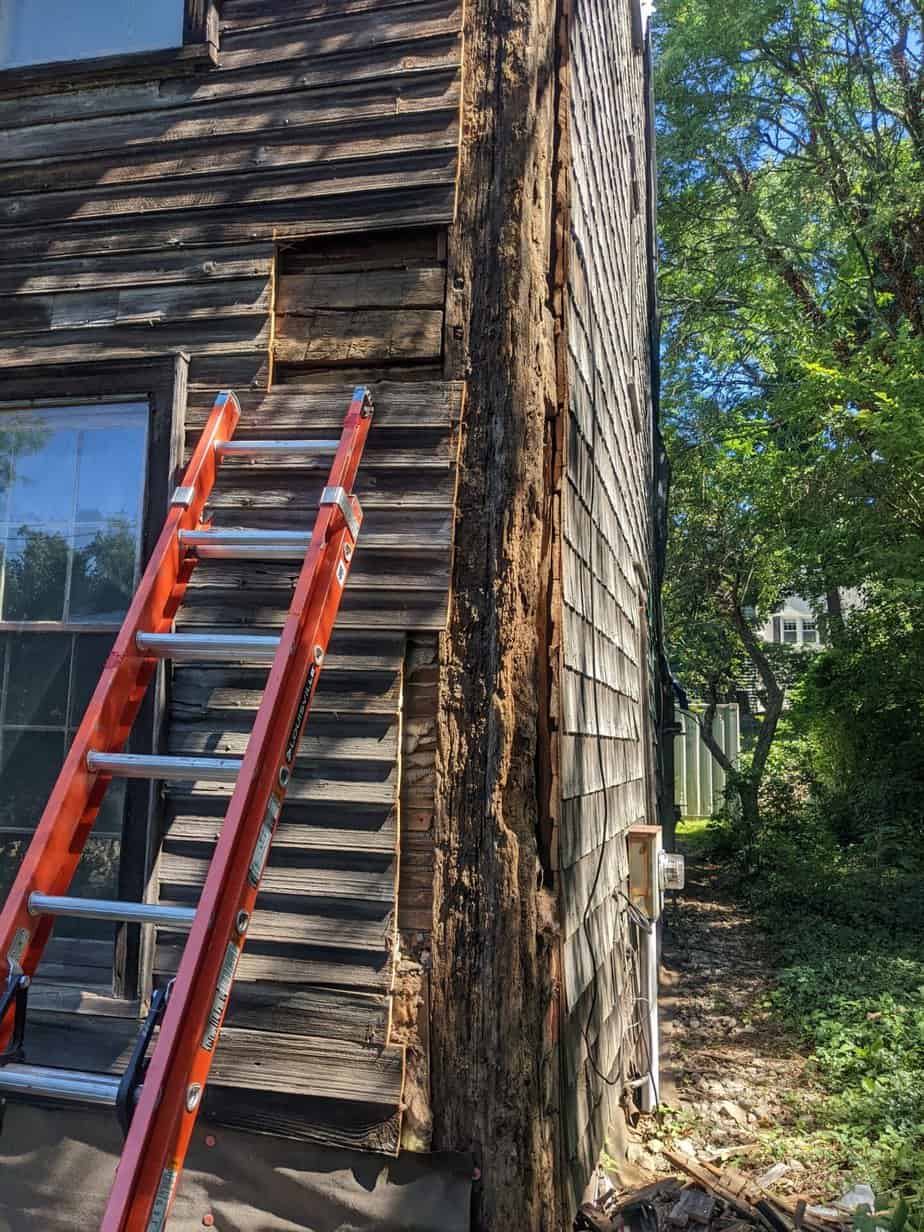
Damage from powder post beetles on a corner post.
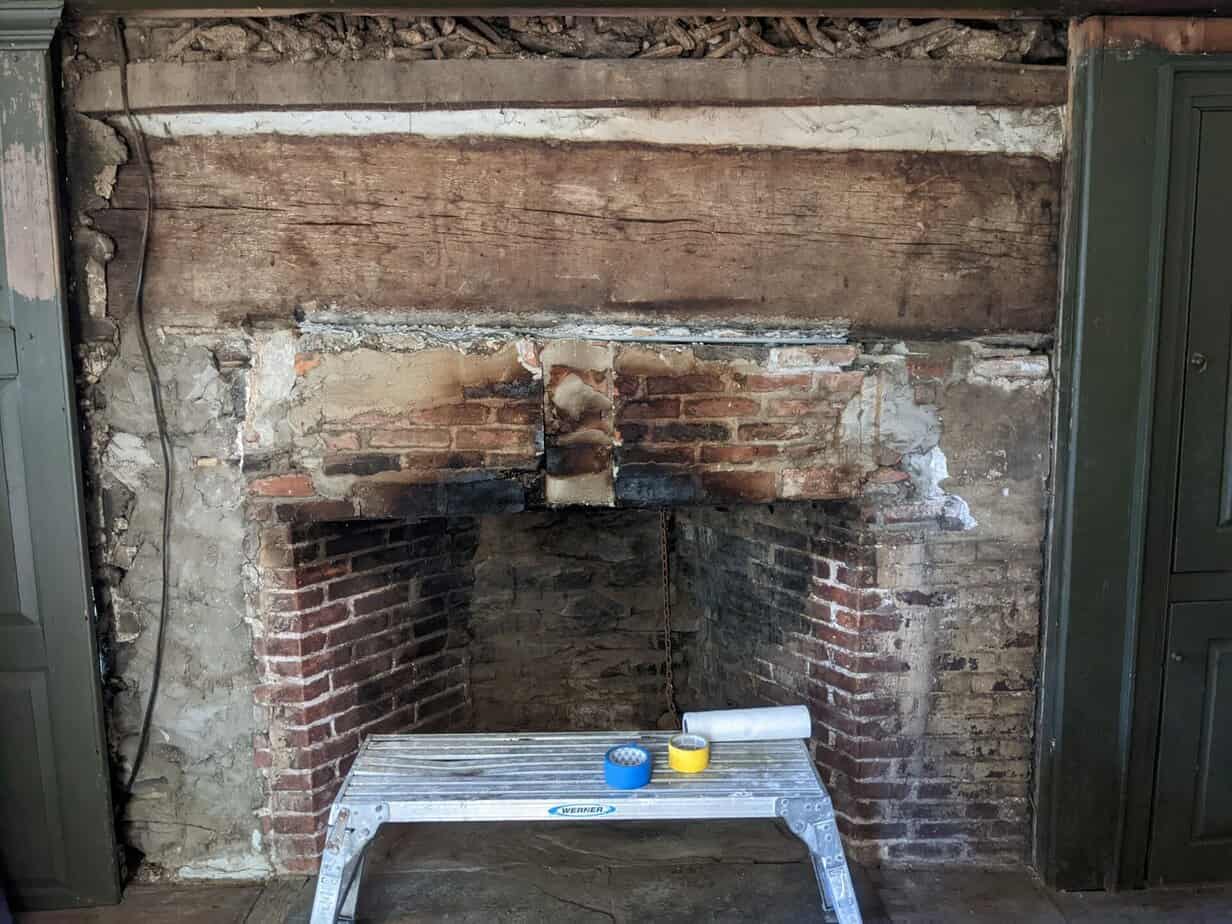
First floor, east room fireplace.
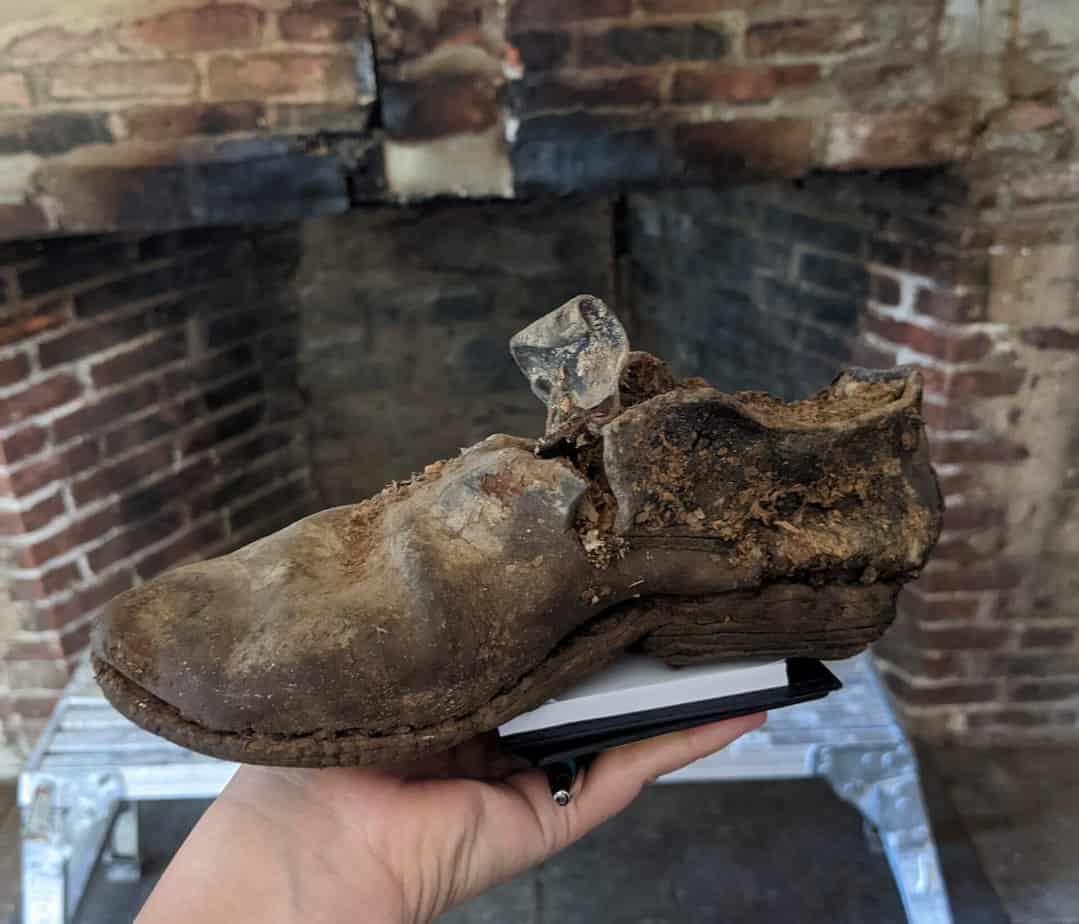
Small shoe found above amongst corn cobs.
shoes were a customary practice in England and the tradition was carried over to America with the English settlers in the 17th century. Some scholars believe the shoes were placed in houses to ward off evil forces such as demons and witches, while others believe that they were a symbol of fertility. In any case they were meant to bestow luck on the occupant of the house. On the lintel itself are a series of carved “witches marks” placed to ward off evil forces and to keep any witches from entering via the fireplace. It is important to note that several Connecticut women including one Goody Knapp of nearby Fairfield were hung in the mid-17th century for being suspected witches.
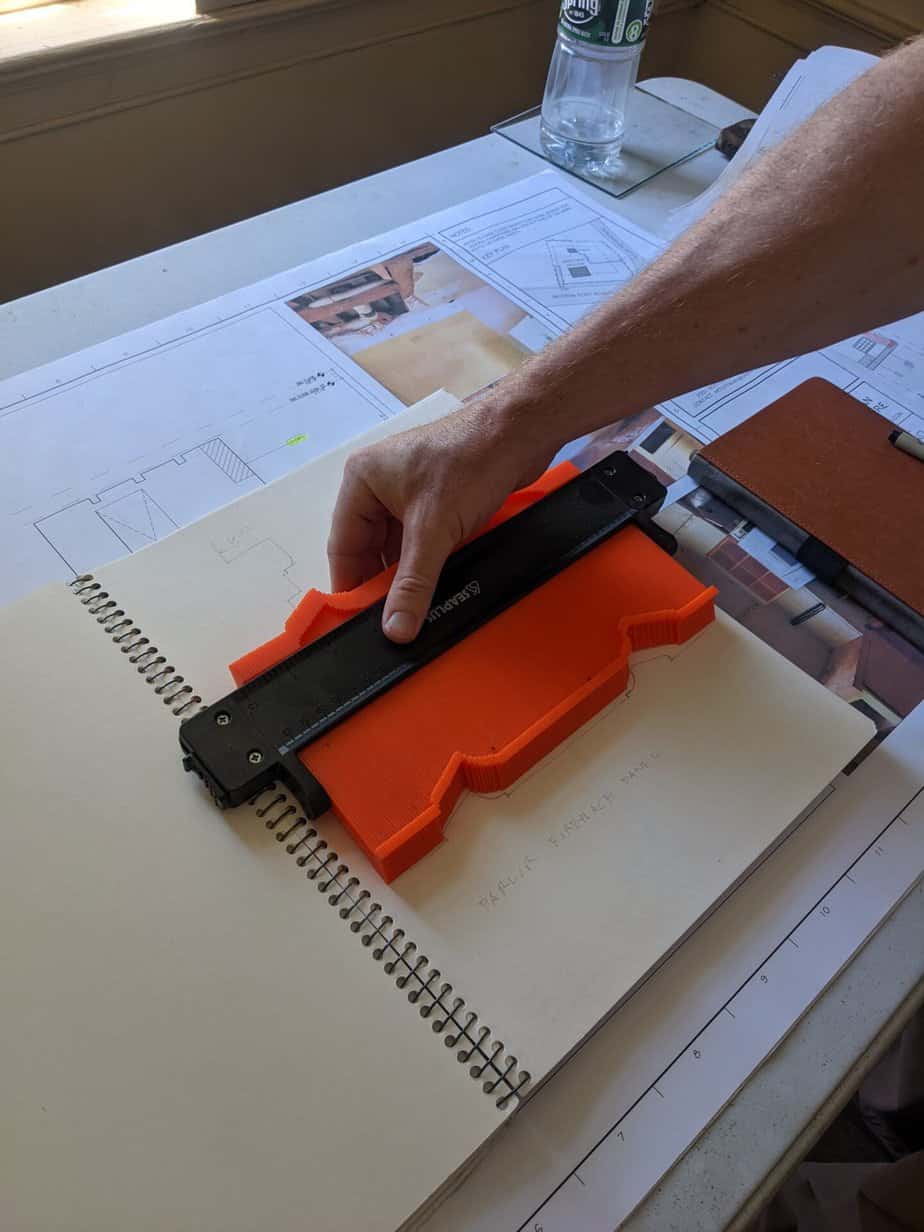
Chris uses a contour gauge to measure and document the trim around the house.
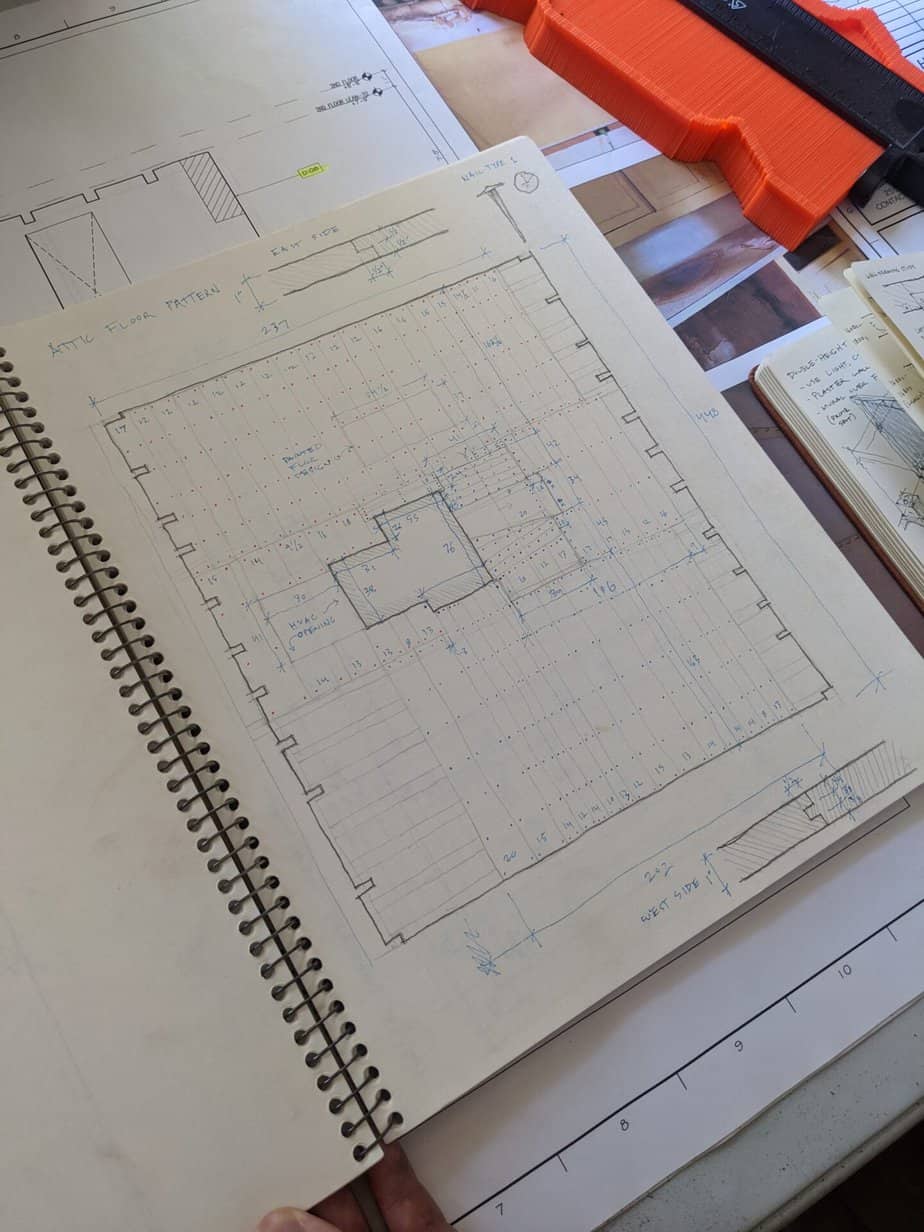
Chris’s documentation of nail patterns in the attic.
All the while, Chris has been documenting the building both as an architect and as a sleuth to determine how this house came to be in its current configuration. Not only has he drawn elevations, molding patterns, and carefully documented the paneling that was removed from the east room fireplace surround, but he has marked out the various nails used and categorized them by age/type. His detective work has been backed up by continuing research which together sometimes raises more questions than answers. One such question is why portions of the building such as the chimney appear to have been constructed parallel to the Post Road while others are slightly askew. These mysteries will no doubt be solved one day, but in the meantime the level of care and consideration taking place in the restoration is always impressive to watch.
Seeing underground
From old maps and documentation, the Fagans knew that there were a number of outbuildings related to the home that now lay buried in the yard, only part of their foundations left. When thinking about new utilities to the house they wanted to make sure there wasn’t an impact to the archaeological remains but didn’t know where exactly these buried foundations were. So, they got in contact with Sarah Sportman, the State Archaeologist, who came down with
Deb Surabian and Krista Dotzel, Archaeologists from the Natural Resources Conservation Service (a government agency that typically helps with conservation efforts), and they lent the use of their ground penetrating radar (GPR) to survey the yard.
The GPR unit looks like a lawnmower with a large screen on top for the operator to interface with. Instead of blades to cut grass, the unit has a transmitter attached to the bottom that emits a pulse into the ground and records the echoes that result from subsurface objects. Kind of like an ultrasound but for the ground! The operator then sees a picture of the scan as a cross section of the ground with areas of different density showing up as different colors. These areas of density change show where objects are underground.
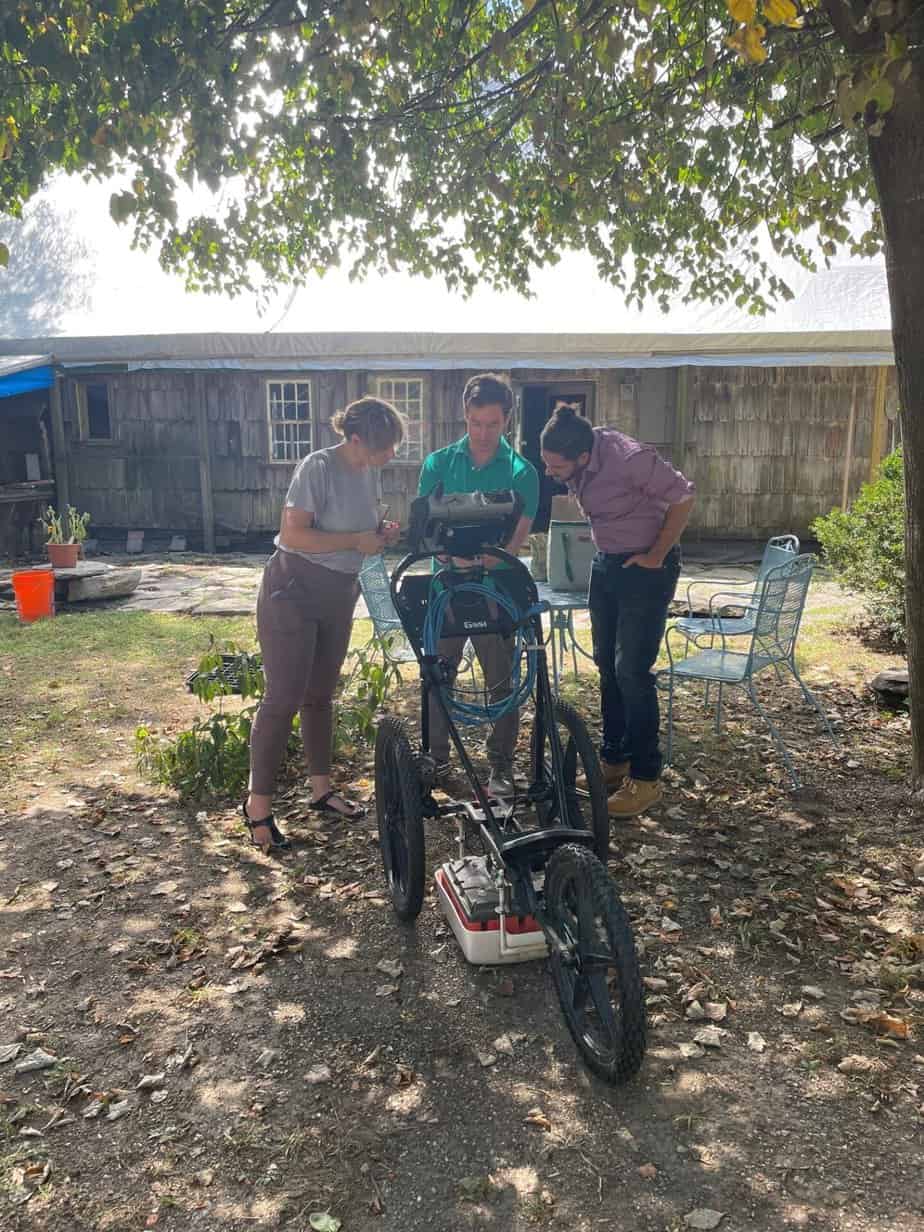
Krista Dotzel, Chris Fagan, and Stefon Danczuk (PCT) look at the GPR screen.
So, the team set up a grid and got to work! After surveying an area of the backyard and the small space between the road and the house the survey was over. Deb and Krista then had to take the scans back to their office to properly interpret them. However, from the raw data they did identify what they believe to be the foundation of a barn in the backyard. Once they finish the report on their findings, we’ll share more- stay tuned!
Finally, Ellen and Chris said there has been plenty of interest in the progress on the house from neighbors and passersby in town. Ellen has installed an interactive art piece housed in a red box on the front wall called “Party Line”. This has been a fun and creative way for the public to interact with the house and posit their own theories on what the large wrought iron ”S“ found on the chimney means. By scanning a QR code visitors are given several theories and then asked the question, “What does the <S> stand for?”
So, what do you think the S stands for? Please contact us to let us know!
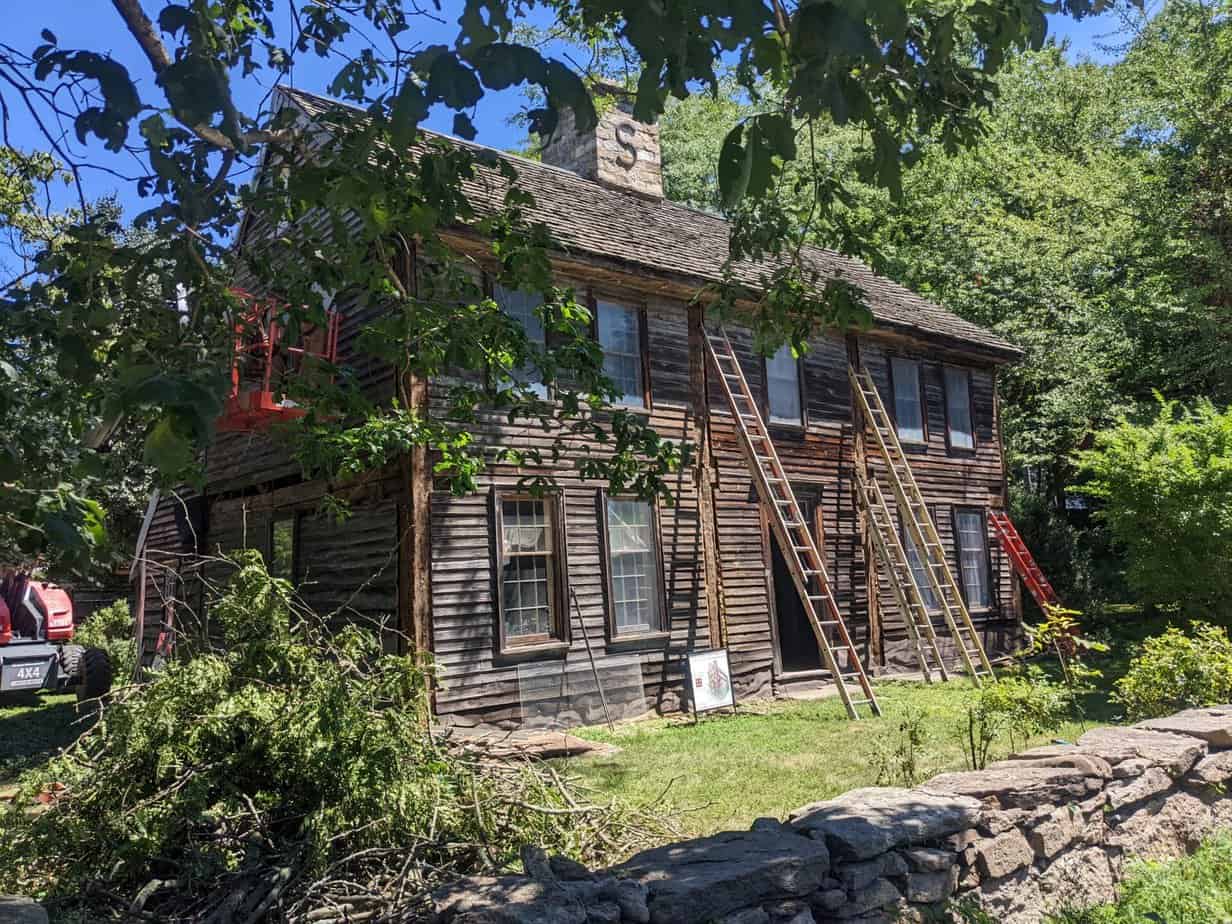
House undergoing work in August.
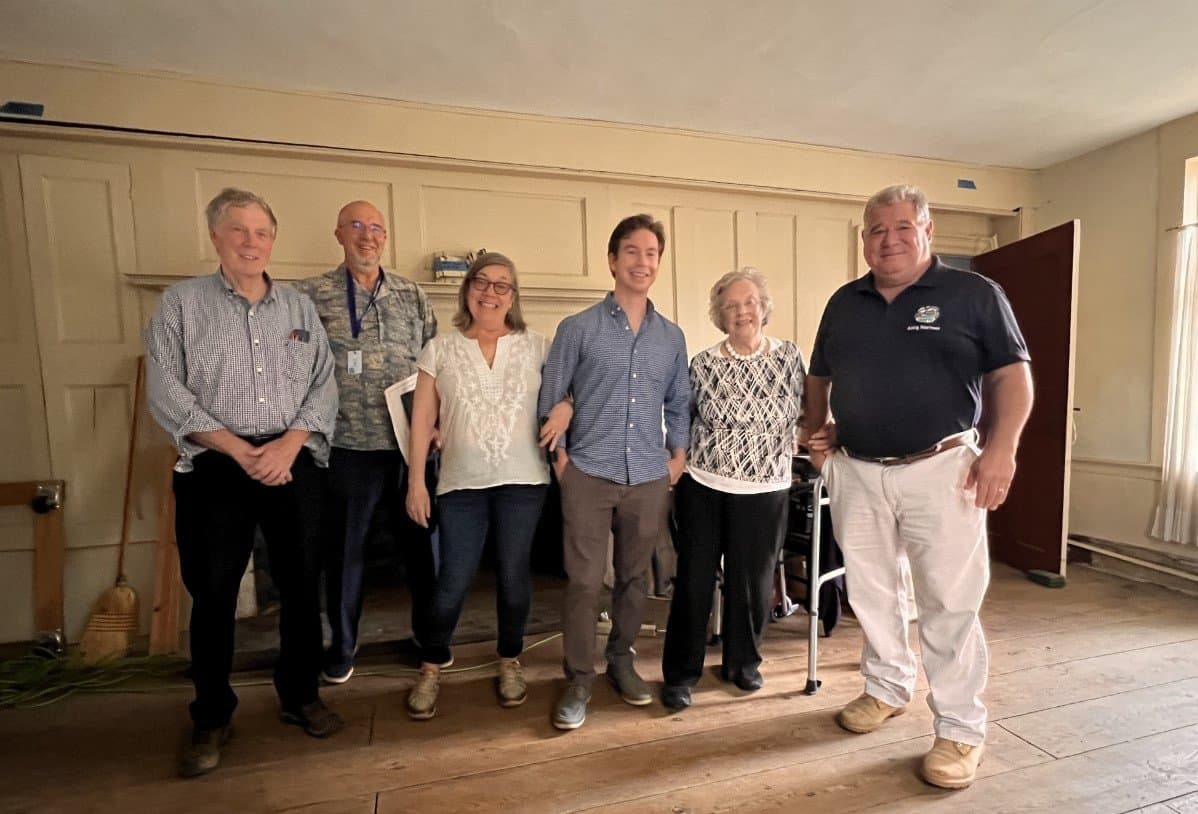
The Fagans with the Darien team (left to right): Robert (Woody) Woodside, Code Compliance Officer, Planning & Zoning; Herve Hamon, Planning & Zoning; Ellen Fagan; Chris Fagan; Marian Castell, Historian; Mike Vitti, Chief Building Official.