Preservation Trades Workforce Development
Fresh Opportunity for Historic Trades
On July 18th, Preservation Connecticut staff observed as friends and family cheered on the newly minted graduates of the Richard P. Garmany Academy at Fresh Start Worx. Cameras shuttered as ten proud and confident students flaunted their six-week carpentry course completion certificates. At the podium, graduates expressed appreciation for loved ones in the audience, along with deep gratitude for one another. There was no shortage of accolades and tributes for Fresh Start Worx’s Executive Director, Jenna Columbus, Academy Director Ricardo Santiago, and the other staff in attendance.
The festivities, which take place regularly throughout the year, celebrate much more than a certificate. Months, sometimes weeks before, those students were homeless, recently released from incarceration, or facing other challenges. Struggling to make their way in the world, each of them found Fresh Start Worx, an organization at the northern boundary of the Asylum Hill neighborhood in Hartford. Their mission is “…to employ and train individuals seeking to improve their lives with a future in building high-quality custom products and, in partnership with community organizations, provides education and training through the…Academy.”
Fresh Start Worx provides the down-and-out with the tools they need for change: financial support, practical training, workplace social skills, fiscal literacy, a new network of friends and supporters, and, what they often need most, empathy and a second chance. Columbus states that “Through our Academy, students gain hands-on experience in woodworking and construction through the Home Builders Institute PACT Core program, while also learning essential job readiness skills like resume building and financial literacy. We have had over 50 graduates in the past five years who have successfully rebuilt their lives.” Many students leave graduation with a certificate in one hand and a job offer in the other. Others gladly stay on to staff Fresh Start Worx’s Social Enterprise program.
The Social Enterprise program, the non-profit business arm of the organization, enables many students to build on their foundational skills by offering continued training in advanced woodworking, computer-aided machining, and even some historic preservation work. Clients of the latter include the Webb-Deane-Stevens Museum (for the Joseph Webb house), the Stowe Center for Literary Activism, Hill-Stead Museum, and others. For the nonprofit developer Northside Institutions Neighborhood Alliance (NINA), Fresh Start Worx helped complete finish trim and carpentry at the Linus Plimpton house. It was through this work that Preservation Connecticut learned of Fresh Start Worx. A few meetings, tours, and one graduation ceremony later, Preservation Connecticut and Fresh Start Worx are poised to launch an expanded curriculum for students interested in learning the fundamentals of historic preservation practice.
Supporting the good work of Fresh Start Worx, while increasing the pool of folks interested in preservation trades, is a win-win. If you’ve recently attempted to garner quotes for preservation projects, you know there’s a shortage of craftspeople who are interested, capable, and available. This issue is not new. Nearly sixty years ago, in 1968, the National Trust for Historic Preservation’s Whitehill Report on Professional and Public Education for Historic Preservation addressed the growing scarcity.
jobs created by historic rehabilitation activity each year in the U.S. (The Campaign for Historic Trades)
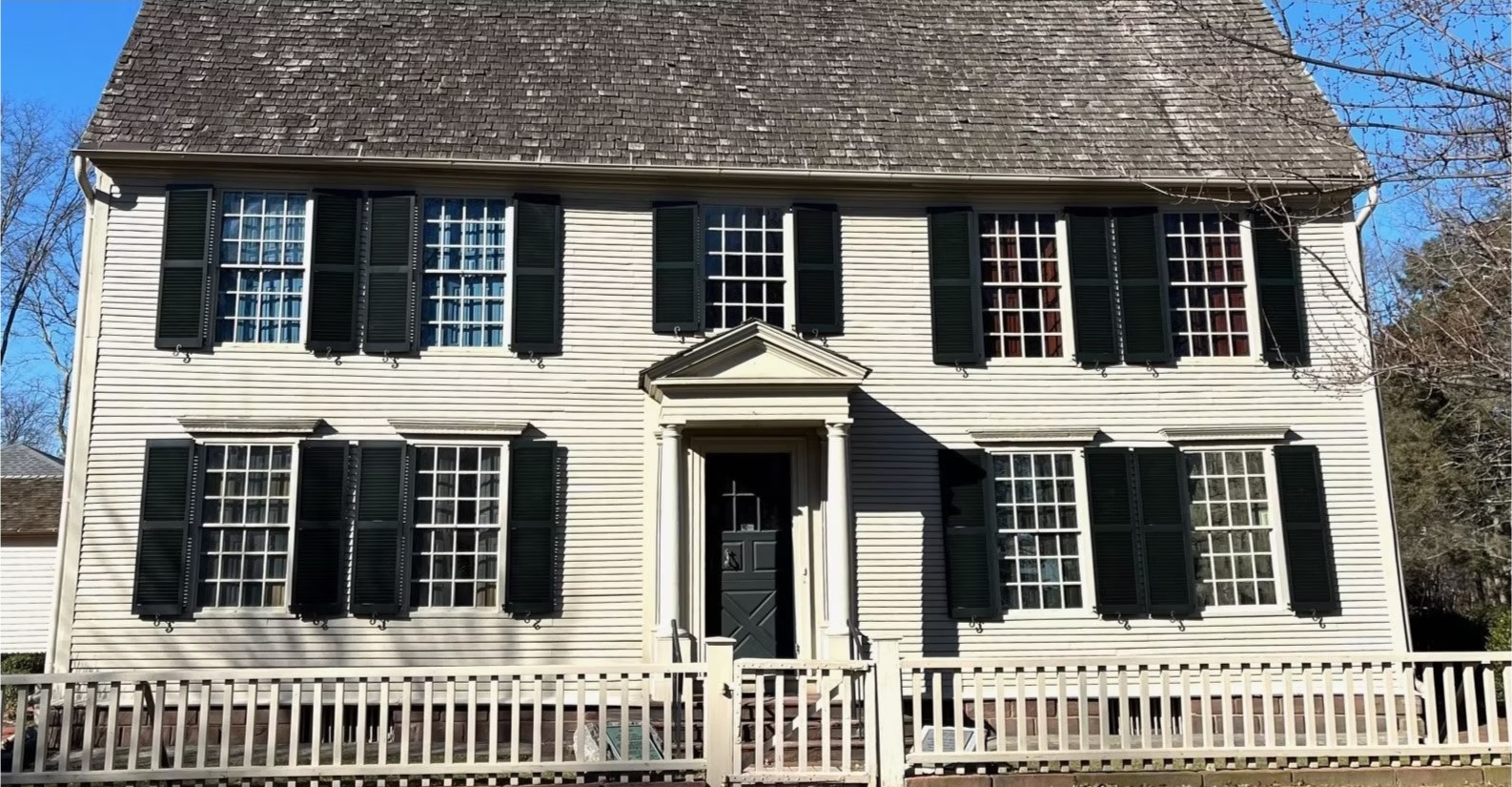
Fresh Start Worx’s business arm restored shutters at the Webb Deane Stevens Museum’s Joseph Webb house in Wethersfield. Courtesy of Fresh Start Worx
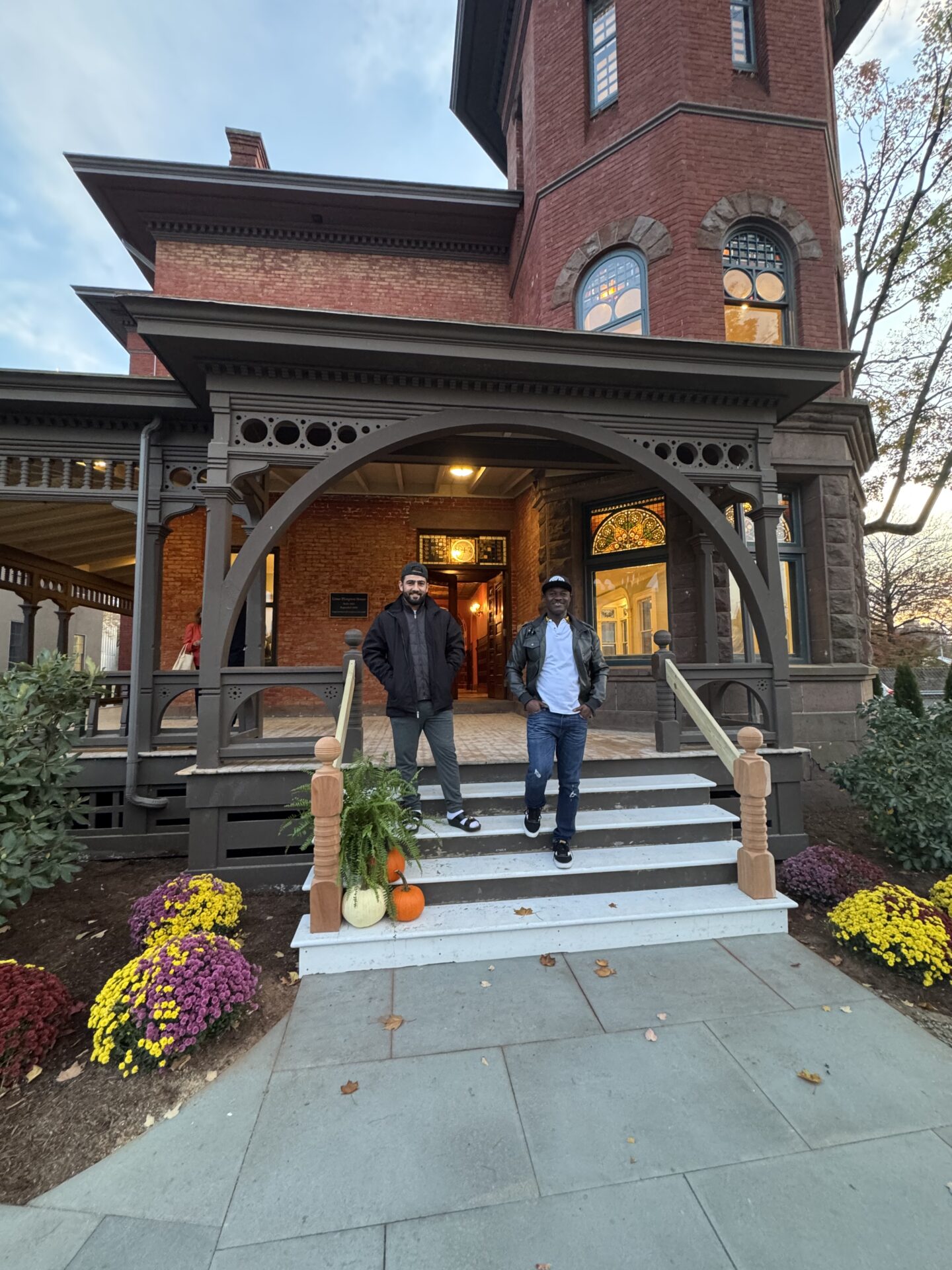
Mohamed and Lyonel at the Linus Plimpton house in Hartford, where they helped reproduce Victorian -style trim. Courtesy of Fresh Start Worx
%
of construction firms report difficulty filling craft positions (Associated General Contractors of America survey, 2019)
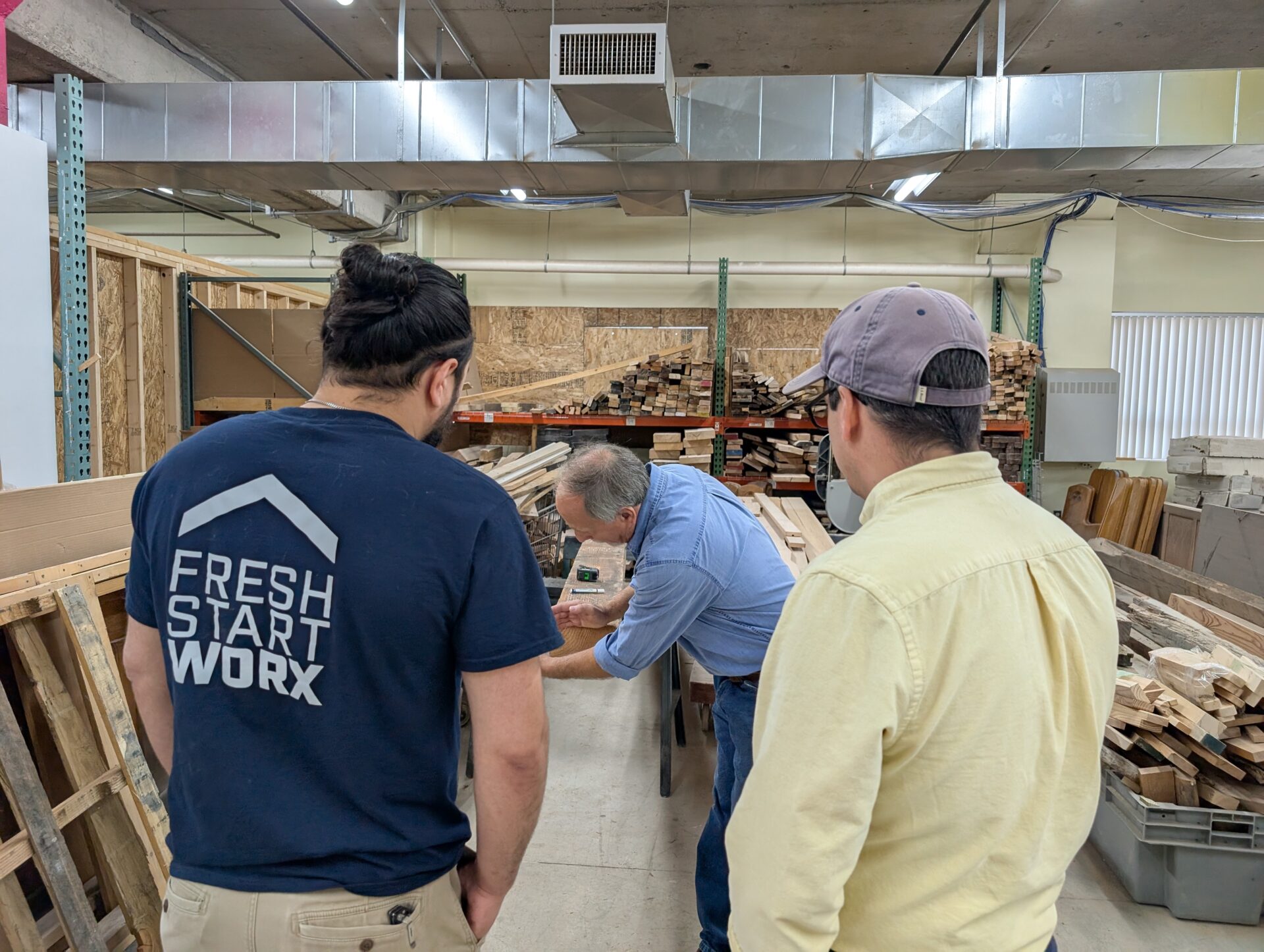
Craftsman Steve Marshall explains about old growth wood.
In the following decades, workforce development and booster programs across the nation, including those organized by Preservation Maryland, The Campaign for the Historic Trades, the Newport Restoration Foundation, the National Park Service, and Colonial Williamsburg, have attempted to address the concerns of the report by garnering Federal recognition for preservation trades and supporting training programs. Despite potential job security due to the demand for preservation projects and a nine percent premium on wages paid to those with experience and training in historic preservation (according to a study by Preservation Maryland), the problem persists. In a 2019 survey by the Associated General Contractors of America, eighty percent of construction firms reported difficulty filling craft positions.
In Connecticut, a promising number of workshops and showcases for historic trades—the TradesUp program is among the largest—have sparked strong interest in many of these skills and trades. But unless the interested immediately start working, we will still struggle to close the gap between school-age children and rapidly retiring preservation professionals.
The gap is not a matter of employers’ lack of interest; instead, anecdotal evidence suggests a scarcity of candidates who are interested or aware of preservation trades. Others may lack the foundational knowledge necessary to expand their skills through on-the-job learning, such as in an apprenticeship —the traditional method by which trades were passed from one generation to the next. According to a policy statement from the American Council of Historic Preservation in 2020, “More recognizable opportunities for workforce development and training in the traditional trades not only would help address this problem [of the labor storage in historic trades] critical to the maintenance of our nation’s historic places, but also would contribute to economic recovery and wellbeing through career pathways that benefit local communities.”
The partnership between Preservation Connecticut and Fresh Start Worx can be a positive step toward offering such a recognizable opportunity for workforce development in historic trades in Connecticut. This collaboration could serve as a prototype for integrating preservation methods and curriculum into established workforce training institutions, quickly and sustainably broadening the pool of potential apprentices with the necessary knowledge and skills to participate in traditional hands-on learning.
You can help.
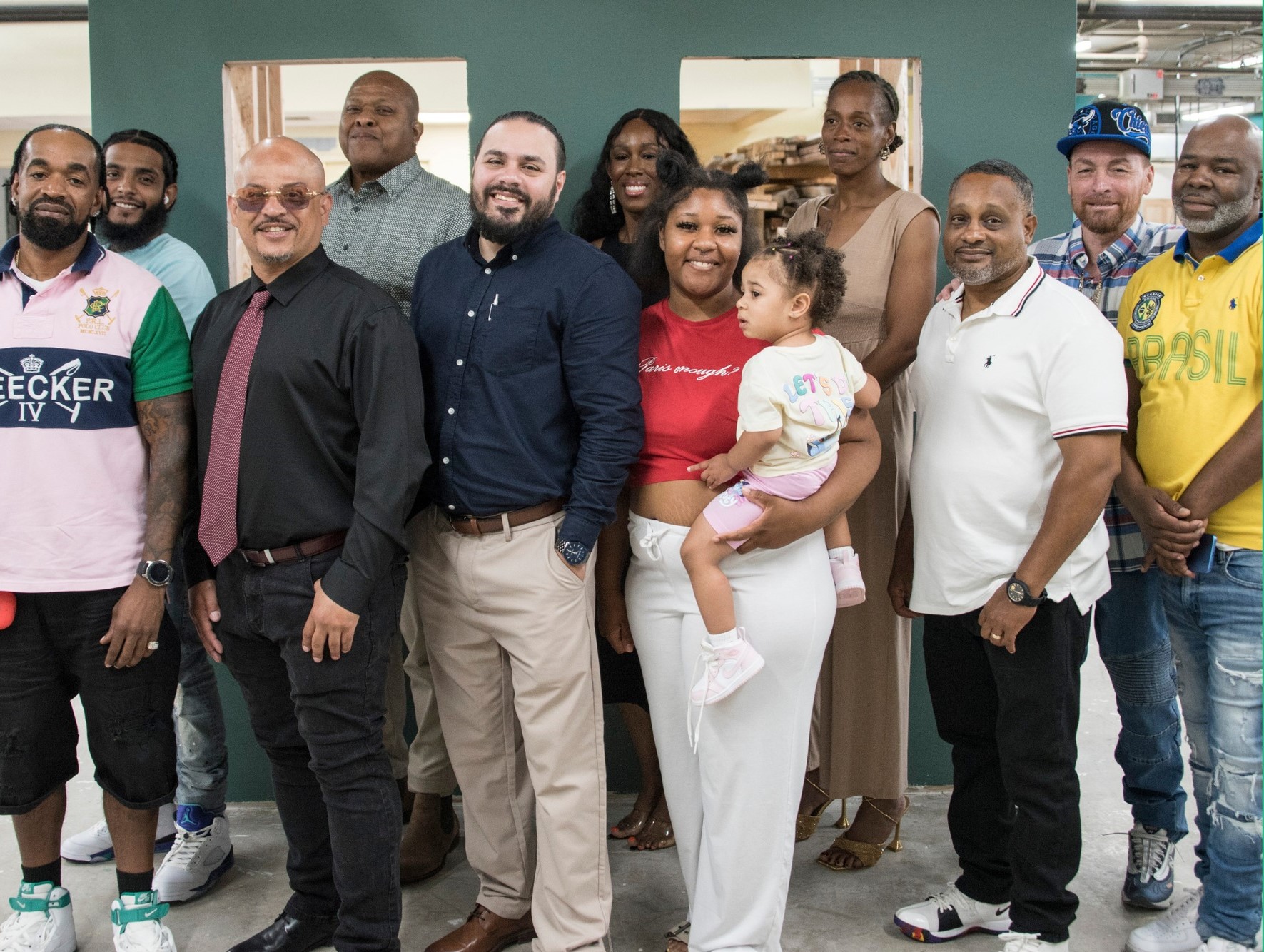
One key feature of the Richard P. Garmany Academy is its ability to provide stipends to students, enabling them to focus on their studies without the distraction of holding another job or worrying about short-term financial concerns. If you’d like to help launch a pilot program about the basics of preservation presented jointly by Preservation Connecticut and Fresh Start Worx, please consider a donation through the button below.